What Your Event Smells Like Matters More Than You Think: The Science of Scent in Memorable Experiences
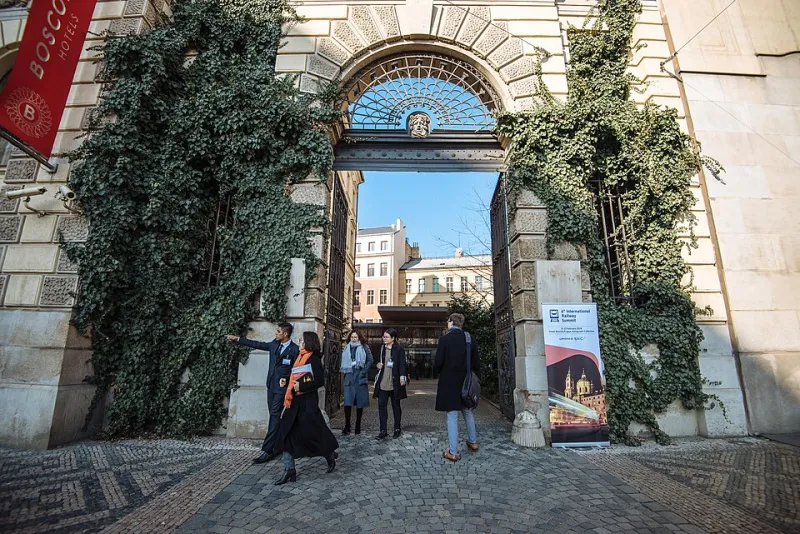
Photo: International Railway Summit, CC BY-SA 2.0, via Wikimedia Commons
Consider the last time a smell stopped you mid-stride. A particular cologne drifting through a hotel lobby, the warm vanilla of a bakery on a cold morning, or the specific cedar-and-citrus combination of a conference room you once sat in years ago. Before your conscious mind could place the memory, your body was already responding to it.
This is not coincidence. It is neuroscience. And for event planners and hosts who are serious about creating experiences that endure beyond the final toast, understanding the mechanics of olfactory memory is no longer optional—it is foundational.
Why Smell Bypasses Every Other Sense
The human brain processes scent differently than it processes sight, sound, or touch. Olfactory signals travel directly to the limbic system—the region governing emotion and long-term memory—without passing through the thalamus, the brain's primary sensory relay station. In practical terms, this means a fragrance can trigger an emotional response before your guest has consciously registered what they are smelling.
Research from Rockefeller University has suggested that humans can distinguish more than one trillion distinct scents, while our visual memory tops out at roughly 10,000 images. More significantly, studies consistently show that memories triggered by smell are more emotionally vivid and more durable than those triggered by any other sense. Psychologists refer to this phenomenon as the Proust Effect—named for Marcel Proust's famous literary passage in which the taste and smell of a madeleine cookie instantly transported the narrator to a richly detailed childhood memory.
For event professionals, the implication is direct: if you want your event to live in your guests' minds long after the venue has been struck, scent is one of your most powerful instruments.
How Luxury Brands Already Use This Knowledge
This is not theoretical territory for the world's most sophisticated brands. Luxury hospitality companies, high-end retailers, and experiential marketing agencies have been deploying fragrance strategy for over two decades.
The Westin Hotels & Resorts introduced their signature White Tea scent in the early 2000s, diffusing it through lobbies to create a consistent, calming brand identity across properties. Singapore Airlines developed a proprietary fragrance called Stefan Floridian Waters, which is worn by cabin crew, infused into hot towels, and diffused subtly throughout the cabin. Abercrombie & Fitch famously saturated their retail stores with a single heavy fragrance—a strategy that, regardless of its divisiveness, created an unmistakable sensory brand signature that customers recognized before they even crossed the threshold.
These are not accidents of interior design. They are deliberate, research-backed investments in emotional association. And the same logic applies directly to corporate events, weddings, and private celebrations.
Fragrance Layering: A Technique Worth Understanding
Among scent designers and olfactory branding specialists, fragrance layering refers to the intentional sequencing of different aromatic notes across the arc of an event—much the way a skilled chef considers the progression of flavors across a multi-course meal.
A well-designed event might open with a light, energizing citrus or green tea diffusion in the arrival space, signaling freshness and anticipation. As guests move into a cocktail reception, warmer base notes—sandalwood, amber, or light musk—might be introduced to encourage relaxed conversation. By the time dinner service begins, the scent environment could shift toward something subtly richer and more grounded, reinforcing a sense of occasion and ceremony.
This kind of sequencing does not require an enormous production budget. It requires intention, timing, and a basic understanding of fragrance families. Reed diffusers, cold-air diffusion systems, and scented floral arrangements can all contribute to a layered olfactory environment without demanding the resources of a large-scale installation.
Practical Applications for Corporate Events
Corporate event planners often focus their sensory budgets on audiovisual production, catering quality, and décor. Scent, if considered at all, tends to be treated reactively—masking the smell of a catering kitchen or neutralizing the mustiness of a venue that has been closed for weeks.
A more strategic approach reframes fragrance as a branding instrument. If your organization is launching a product, introducing a new initiative, or hosting a client appreciation event, consider what emotional tone you want to establish from the moment guests walk through the door. A technology company hosting an innovation summit might choose clean, mineral, or ozonic notes to convey precision and forward momentum. A financial services firm recognizing its top performers might lean toward warm wood and leather accords that communicate stability, prestige, and earned achievement.
These choices may seem subtle—and they are. That subtlety is precisely the point. Guests will not consciously identify the scent as a design element. They will simply feel something when they enter the space, and that feeling will attach itself to the memory of your event.
Scent at Weddings: Creating a Signature Memory
For couples designing their wedding experience, fragrance presents one of the most personal and enduring opportunities available. The flowers chosen for ceremony arrangements contribute an olfactory signature whether or not it is consciously designed. The question is whether that signature is intentional.
Some couples are now working with floral designers and scent consultants to develop a consistent aromatic thread across their wedding—from the ceremony flowers to the reception centerpieces to a custom candle gifted to guests as a favor. When that candle is lit in a guest's home six months later, the scent triggers the emotional memory of the celebration with a clarity that a photograph cannot replicate.
For weddings held in outdoor settings—garden ceremonies, vineyard receptions, coastal venues—the natural scent environment itself becomes a design consideration. Choosing a ceremony location where jasmine is in bloom in June, or where eucalyptus lines the approach path, is a scent decision as much as it is an aesthetic one.
What to Avoid: The Pitfalls of Scent Misapplication
Not all fragrance decisions enhance an event. A few principles are worth holding firmly.
First, intensity matters enormously. An overpowering scent—however pleasant in isolation—creates discomfort and can trigger headaches or allergic responses in sensitive guests. The goal is ambient presence, not saturation. If guests can identify the scent immediately upon entering, it is likely too strong.
Second, coherence with the event's overall sensory environment is essential. A floral-heavy fragrance in a venue decorated with industrial materials and modern minimalism creates cognitive dissonance. The scent should reinforce the event's aesthetic and emotional intent, not contradict it.
Third, consider your guest demographics carefully. Fragrance sensitivities and allergies are more common than many planners assume. Whenever possible, opt for natural diffusion methods and avoid synthetic fragrance concentrations that may provoke adverse reactions.
The Lasting Argument for Olfactory Design
At Tawa Event Company, we believe that the most enduring events are the ones that engage guests on every level—not just what they see and hear, but what they feel and, yes, what they smell. The events that guests recount years later are rarely defined by a single spectacular production moment. They are defined by the cumulative texture of a sensory environment that felt considered, cohesive, and alive.
Scent is one of the few design elements that continues working long after the event itself has ended—living in the memory of every guest who encounters a similar fragrance in the weeks and months that follow. That is a remarkable return on a modest investment.
The question is not whether your event will have a smell. It will. The question is whether you will design that smell with the same care you bring to every other element of the experience.