Illuminating the Truth: Why Lighting Is the Most Underestimated Force Shaping Your Event's Emotional Impact
The Element No One Defends Until It's Too Late
Every experienced event planner has witnessed it: a venue that looked breathtaking in photographs arrives on the day of the event bathed in the kind of overhead fluorescent wash that belongs in a hospital corridor rather than a celebration. The florals are exquisite. The catering is impeccable. Yet something feels fundamentally wrong, and guests cannot quite articulate why. They leave earlier than anticipated. Conversations feel forced. The photographs—despite every other detail being carefully curated—look flat and unflattering.
The culprit, almost invariably, is lighting.
Despite being one of the most psychologically potent tools available to event designers, lighting is consistently treated as an afterthought. Budgets are routinely trimmed in this category before any other, and the reasoning tends to follow a familiar pattern: the venue already has lights, so why pay additionally for more? This line of thinking, however reasonable it sounds in a planning spreadsheet, reflects a fundamental misunderstanding of what lighting actually does at an event—and what its absence of intentionality costs.
What Science Tells Us About Light and Human Emotion
The relationship between illumination and emotional state is not a matter of aesthetic preference. It is grounded in well-documented psychological and neurological research. Color temperature, measured in Kelvin, has a direct effect on how the human brain interprets an environment and regulates mood. Cool white light in the range of 5,000 to 6,500 Kelvin—the spectrum typical of standard overhead commercial fixtures—activates alertness and even mild anxiety. It is, by design, a productivity light. It signals to the brain that this is a space for work, not celebration.
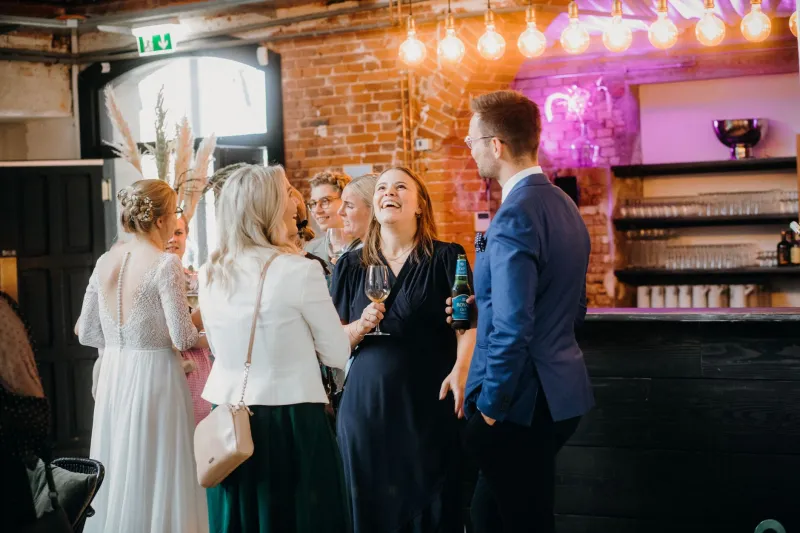
Warm light, by contrast, falling between 2,700 and 3,200 Kelvin, promotes relaxation, social openness, and a sense of intimacy. Studies in environmental psychology consistently demonstrate that people in warmer-lit environments report higher levels of comfort, engage in longer and more meaningful conversations, and form more positive associations with the experiences they have in those spaces. In the context of events—where memory formation and emotional resonance are the ultimate measures of success—this distinction is not trivial. It is foundational.
Intensity compounds the effect. Bright, high-intensity environments suppress the kind of vulnerable social behavior that makes events feel alive. Dimmer, more graduated lighting—particularly when layered across multiple sources at varying heights—creates what designers call visual depth, and what guests simply experience as warmth. The room feels inhabited rather than staged.
The Architecture of Strategic Illumination
Professional lighting design is not merely about making a room look prettier. It is about architecting an emotional journey that unfolds in parallel with the event's programmatic flow.
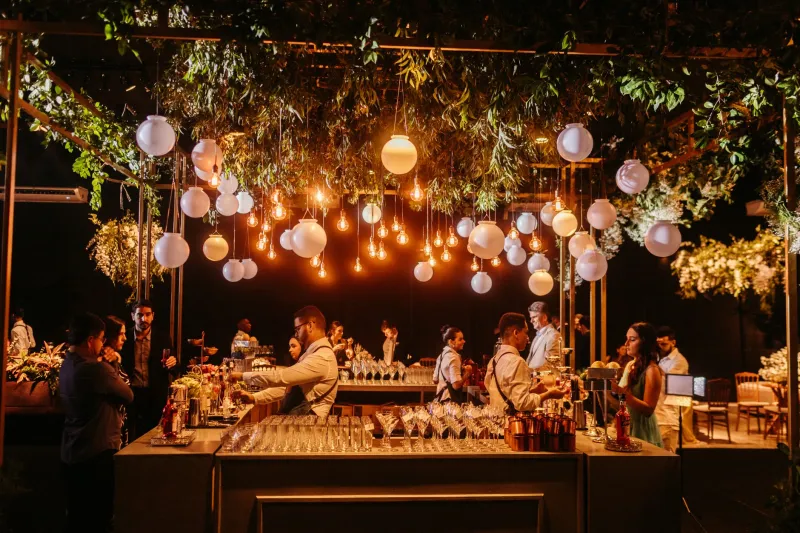
Consider how a well-designed corporate gala might use lighting as a narrative tool. As guests arrive during cocktail hour, ambient uplighting in soft amber tones establishes a welcoming, convivial atmosphere. When the dinner program begins, a subtle shift—slightly cooler tones at table level, warmer washes on the stage—directs attention toward the speaker while maintaining the intimacy of the dining experience. During an awards presentation, focused spotlighting creates a moment of theatrical distinction that no amount of applause alone can replicate. And as the evening transitions to dancing, dynamic color shifts and moving fixtures transform the same physical space into something that feels categorically different—energized, celebratory, released.
None of this requires an enormous budget. It requires intention.
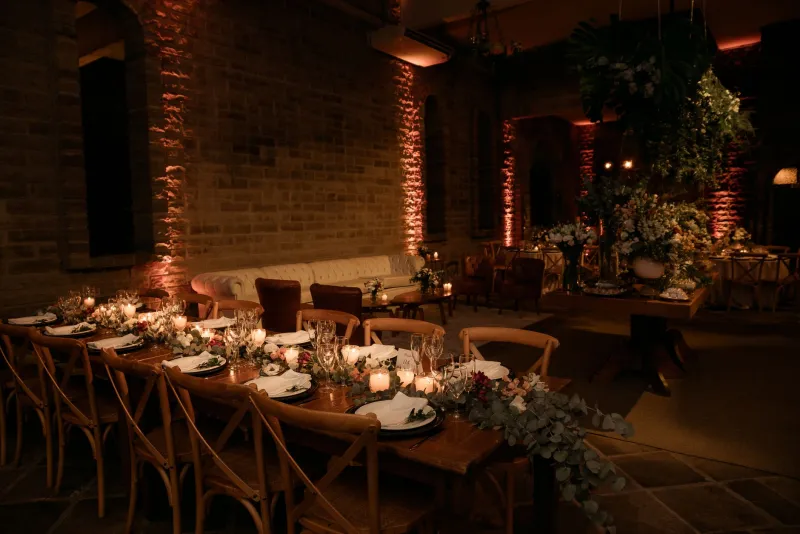
The same principle applies to weddings, where lighting's role in memory formation is perhaps even more pronounced. The soft candlelight glow that photographs remember from a ceremony is not accidental. It is the result of deliberate decisions about fixture type, placement, and temperature. A reception hall that might otherwise feel cavernous becomes intimate through the strategic use of bistro string lights overhead, pin-spotted centerpieces that draw the eye downward, and warm uplighting along perimeter walls that eliminates the visual cold zones that make large rooms feel impersonal.
Real-World Consequences of Neglect
The cost of overlooking lighting is not always immediately visible on the evening itself. Sometimes it surfaces in the photographs that clients receive weeks later—images where every other detail is present but the magic somehow failed to translate. Skin tones appear sallow. The dance floor looks sparse even when it was packed. The centerpieces, which were genuinely stunning in person, appear washed out or shadowed in ways that no amount of post-processing can fully correct.
Sometimes the cost is more immediate. Guests who feel uncomfortable in a space—even without consciously identifying the source of their discomfort—disengage earlier. They migrate toward exits. They reach for their phones rather than for conversation. The energy that a skilled event team worked for months to cultivate dissipates not because the program failed, but because the environment failed to support it.
At Tawa Event Company, we have observed this dynamic repeatedly across venue types and event scales. A conference room in a Chicago hotel became a genuinely moving memorial celebration through nothing more than the removal of overhead fluorescents and their replacement with warm-toned portable fixtures and strategically placed candles. A garden wedding in suburban Virginia that had been planned with minimal lighting consideration was transformed in the final week of preparation when the couple agreed to add bistro overhead strands and amber-gelled uplights along the venue's perimeter fence—a change that cost less than a single additional hour of their photography package and produced a visual environment that made every other element of the event look better.
Allocating Budget Where It Earns the Return
The practical question for any event planner or client is not whether lighting matters—the evidence on this point is unambiguous—but rather how to allocate resources toward it intelligently.
A reasonable starting framework is to treat lighting as a peer-level investment alongside catering and entertainment rather than a secondary concern addressed from whatever budget remains. For events where atmosphere and guest experience are primary objectives, dedicating between eight and fifteen percent of the total event budget to professional lighting design and execution is not extravagant; it is strategic. This range accommodates everything from basic warm-wash uplighting packages for smaller events to fully programmed dynamic systems for large-scale corporate productions.
When budget constraints genuinely limit options, prioritizing warmth over volume is the most reliable principle. A smaller number of well-placed warm fixtures will consistently outperform a larger number of poorly positioned cool ones. Candles, where venue regulations permit, remain one of the most cost-effective tools in any lighting designer's inventory. And the elimination of unflattering overhead lighting—even when replacement options are limited—is almost always preferable to leaving it in place.
Creating Moments That Light Remembers
At its core, the argument for intentional lighting design is an argument for taking seriously the experiences guests carry home from an event. Memory is not formed equally across all sensory inputs. Environments that feel right—that create a sense of ease, warmth, and occasion—encode more deeply and more positively than those that merely look correct in a planning document.
Lighting is the variable that most directly governs whether a space feels right. It operates below the threshold of conscious awareness for most guests, which is precisely why its influence is so pervasive and so difficult to compensate for through other means. No centerpiece, however elaborate, corrects for a room that feels cold. No entertainment program, however spectacular, fully overcomes an environment that signals institutional rather than celebratory.
The moments that last a lifetime are not accidental. They are built, layer by layer, from decisions that most guests will never consciously notice—but will never entirely forget.