Walking in Your Guest's Shoes: A Systematic Approach to Uncovering Hidden Event Failures
The Illusion of a Successful Event
When the final guest departs and the venue falls quiet, most event organizers measure success by the visible: applause during the keynote, compliments at the reception, a catering spread that was cleared by nine o'clock. These signals feel reassuring, and in many cases they are genuine. But they are also profoundly incomplete.
What those moments cannot tell you is what happened in the forty-five minutes before the program began. They cannot reveal how many guests circled the parking structure twice before finding an entrance, or stood at an unmarked registration table wondering whether they were in the right line. They cannot quantify the quiet frustration of a wedding guest who couldn't locate the restrooms, or the corporate attendee who spent the first fifteen minutes of a networking reception looking for somewhere to set down a drink.
These are not catastrophic failures. They are the kind of small, cumulative frictions that never make it into a post-event satisfaction survey—and yet they are precisely the experiences that shape how guests remember your event long after the formal program has concluded.
The discipline of the guest experience audit exists to surface exactly these invisible problems.
What an Audit Actually Means
A guest experience audit is not a checklist of vendor deliverables or a review of budget line items. It is a structured, empathetic walkthrough of every touchpoint a guest encounters—beginning well before they arrive at the venue and extending through the moment they reach their car or rideshare at the end of the evening.
The fundamental question an audit asks is deceptively simple: What does it actually feel like to be a guest at this event? Not what you intended it to feel like. Not what the floor plan suggests it should feel like. What it genuinely, experientially feels like for someone who does not have your knowledge, your access, or your map of the space.
This distinction—between intention and lived reality—is the entire point. Every event organizer has a mental model of how the experience will unfold. The audit's purpose is to stress-test that model against the friction points that exist in the gap between the plan and the execution.
The Five Zones of Guest Experience
A rigorous audit organizes the guest journey into distinct zones, each of which carries its own category of risk.
Zone One: Pre-Arrival. This phase begins the moment a guest receives their invitation or event confirmation. How clear is the information about parking, transportation, and arrival timing? If the event is at an urban venue, are rideshare drop-off points specified? Are guests who are driving given garage rates in advance? Ambiguity at this stage generates anxiety before the event has technically begun—an emotional deficit that the experience must then overcome.
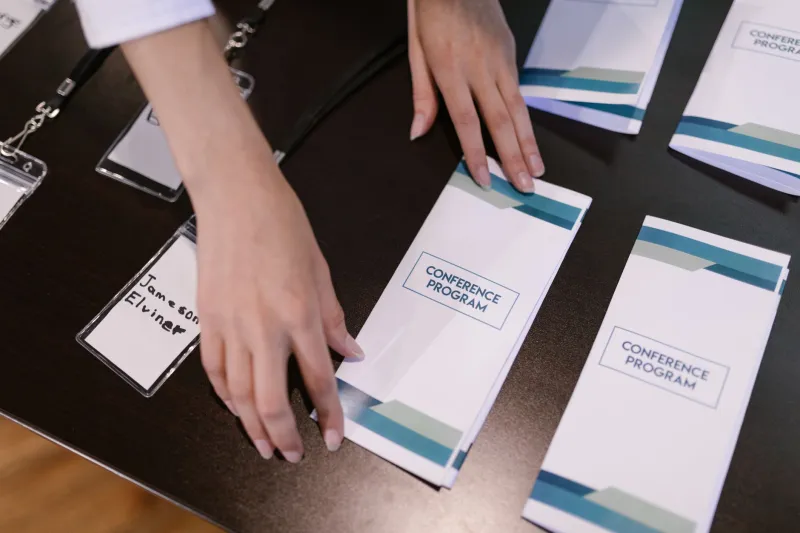
Zone Two: Arrival and Entry. The transition from the street or parking area into the event space is one of the highest-risk moments in the entire guest journey. Signage that seems obvious to someone who has toured the venue is frequently invisible to a first-time visitor. Registration processes that flow smoothly during a rehearsal can generate bottlenecks when three hundred guests arrive within the same twenty-minute window. Auditing this zone means physically walking the path a guest would take—ideally without relying on insider knowledge—and noting every moment of uncertainty.
Zone Three: The In-Event Experience. Once guests are inside, the audit shifts to flow, wayfinding, and comfort. Are cocktail tables positioned so that conversations can form naturally, or do they create awkward clustering near the bar? Is the ambient noise level in the networking area high enough that guests must shout, undermining the connections the event is designed to facilitate? For corporate events, are breakout session rooms clearly labeled and easy to locate between sessions? For weddings, do guests understand where they should be and when without needing to ask?
Zone Four: Service Touchpoints. Every interaction a guest has with event staff—catering servers, registration volunteers, venue employees—is a touchpoint that either reinforces or undermines the experience. An audit examines whether staff are empowered to answer common questions, whether they are stationed where guests actually need assistance, and whether the handoffs between vendors are visible to guests in ways that create confusion.
Zone Five: Departure. The conclusion of an event is disproportionately influential on how guests remember the entire experience. Long coat check lines, unclear exit paths, and the absence of any acknowledgment as guests leave are common failures in this zone. A well-audited departure sequence sends guests into the night with a final impression that reinforces the quality of everything that preceded it.
Why Surveys Consistently Miss the Point
Post-event surveys are a standard tool in the event industry, and they have genuine value. But they are structurally incapable of capturing the friction points that an audit is designed to surface.
Surveys rely on guests articulating experiences they may not have consciously registered. Most guests will not write, "I was confused about where to park and it made me feel slightly anxious before I even walked in the door." They will either not mention it at all, or they will simply rate the overall experience a seven instead of a nine—with no explanation that would allow you to diagnose the cause.
Feedback also skews toward the memorable and the extreme. Guests are far more likely to comment on exceptional food or a malfunctioning microphone than on the quiet, cumulative effect of a registration process that made them feel slightly unwelcome. The audit fills this gap by capturing the experience at a granular level that self-reported feedback cannot reach.
Conducting Your Own Audit
The most effective audits are conducted by someone who can genuinely approximate the guest's perspective—ideally a team member or trusted colleague who was not involved in the logistical planning of the event. Their unfamiliarity is an asset, not a liability.
For events that recur annually, consider designating one team member to attend the event exclusively as an observer, moving through each zone of the guest journey with a structured observation framework rather than operational responsibilities. Document friction points in real time rather than relying on memory.
For single-occurrence events such as weddings, the audit can be conducted during the venue walkthrough and rehearsal, with the explicit goal of identifying every moment where a guest might experience uncertainty, delay, or discomfort. Bring someone who has never visited the venue and ask them to navigate it without guidance.
The Return on Attention
The value of a guest experience audit is not that it reveals dramatic failures—it rarely does. Its value lies in the accumulation of small improvements that, taken together, transform an event from one that merely executes its program to one that genuinely honors its guests.
At Tawa Event Company, we believe that the moments guests carry with them long after an event concludes are shaped as much by what they felt in the margins—arriving, waiting, transitioning, departing—as by the formal program itself. Auditing those margins is not a luxury reserved for the largest budgets. It is a discipline available to any organizer willing to walk the path their guests will walk, and to see it honestly.