The Foundation Nobody Sees: How Logistics Mastery Separates Memorable Events from Costly Disasters
There is a particular kind of failure that haunts event planners long after the last guest has departed. It is not the centerpiece that arrived in the wrong color, nor the DJ who played an awkward song. It is the slow, creeping unraveling that begins when a shuttle arrives forty minutes late, when a caterer cannot locate the loading dock, or when two vendors receive contradictory setup instructions. These are not aesthetic failures. They are operational ones—and they are far more damaging.
At Tawa Event Company, we have spent years observing a consistent pattern: clients invest extraordinary energy into the visible elements of their events while treating logistics as an afterthought. The result is a beautiful stage with a shaky foundation. Understanding why operational precision matters—and how to achieve it—is the difference between an event that guests remember fondly and one they quietly endure.
The Illusion of the "Details" Conversation
When most clients hear the word "logistics," they picture spreadsheets and timelines—necessary but uninspiring administrative work. What they rarely appreciate is that logistics is the architecture of experience. Every moment a guest encounters during your event, from the ease of finding parking to the pace at which dinner courses arrive, is a direct product of operational decisions made weeks or months in advance.
Consider arrival flow. In a 2022 corporate gala we coordinated for a technology firm in Chicago, the venue's entrance design created a natural bottleneck that, left unaddressed, would have forced 400 guests into a single-file queue stretching onto the sidewalk. By repositioning check-in stations, designating separate entry lanes for pre-registered attendees, and stationing staff at precise intervals, we reduced average entry time from an estimated eleven minutes to under three. Guests walked in feeling welcomed. They had no idea how close the alternative had been.
That invisible intervention is what professional logistics planning looks like in practice.
When Vendor Communication Breaks Down
The vendor ecosystem surrounding any major event is a complex network of interdependent professionals—caterers, florists, audiovisual crews, photographers, transportation companies, and venue staff—each operating on their own internal timelines and priorities. Without a single, authoritative communication framework, the gaps between these teams become fault lines.
One of the most instructive cases we encountered involved a wedding in the Hudson Valley region of New York. The couple had assembled an exceptional team of vendors, each highly regarded in their respective fields. What they had not assembled was a shared operational plan. The florist arrived expecting a four-hour setup window; the venue had allocated two. The catering team assumed rentals would be staged by the linen company; the linen company had not received that instruction. By the time the ceremony began, the reception space was still partially unfinished, and the couple's coordinator was managing a cascade of improvised decisions rather than supporting the family.
The aesthetic vision was beautiful. The execution was fractured. Guests noticed the delays. The couple noticed the stress on their coordinator's face. The photographs, wonderful as they were, could not fully capture the anxiety that had colored the afternoon.
A unified vendor communication protocol—including shared call sheets, confirmed load-in sequences, and a single point of escalation for day-of decisions—would have prevented every one of those failures.
Contingency Planning Is Not Pessimism. It Is Professionalism.
Among the most common misconceptions in event planning is the belief that contingency planning signals a lack of confidence in the primary plan. In reality, it signals the opposite: a thorough understanding of how complex systems behave under pressure.
Weather contingencies for outdoor events are the most obvious example, but the discipline extends far beyond rain tarps and tent rentals. What happens if a keynote speaker's flight is cancelled? What is the protocol if the audiovisual system fails during a product launch? Who has the authority to make a real-time catering substitution if a critical ingredient does not arrive?
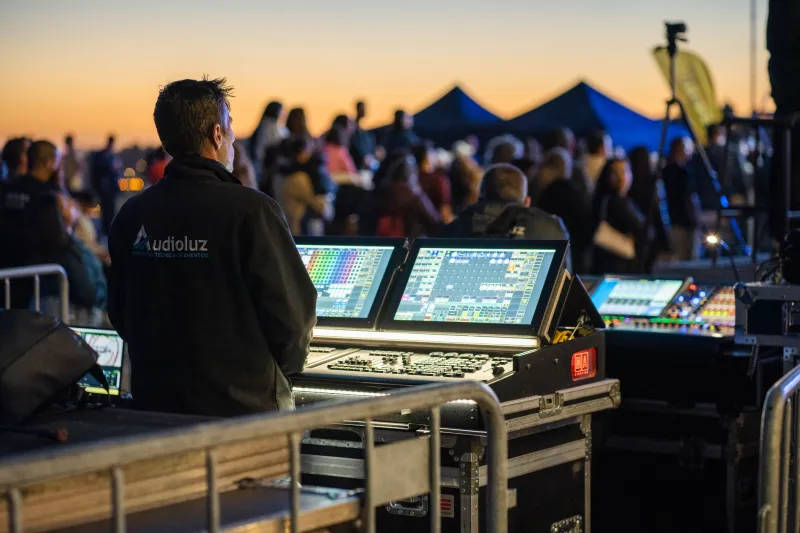
At a corporate awards ceremony we managed in Dallas, a power surge thirty minutes before the program was scheduled to begin knocked out the primary sound system. Because we had documented a backup protocol—including the location of the venue's auxiliary system and the contact information for a local audiovisual emergency vendor—our team had sound restored within eighteen minutes. The program began seven minutes late. Attendees assumed it was intentional pacing. Not a single person in that ballroom knew what had occurred.
That outcome was not luck. It was the result of a contingency document that most clients never read and every client benefits from.
Guest Experience Is an Operational Output
It is worth pausing on a concept that reshapes how we think about event design: the experience your guests have is not simply the product of your creative choices. It is the product of your operational ones. A stunning venue that runs out of seating during cocktail hour becomes a source of frustration. A perfectly curated menu that arrives cold because of a kitchen timing error becomes a disappointment. A heartfelt ceremony that guests cannot hear because of a sound check that was rushed becomes a missed connection.
Guest experience, in other words, is downstream of logistics. The emotion you intend to create—the warmth, the excitement, the sense of being genuinely celebrated—can only reach your guests if the operational infrastructure delivers it intact.
This is why, at Tawa Event Company, we treat logistics planning not as a support function but as a core creative discipline. The timeline is not a bureaucratic document. It is a choreography. The vendor communication plan is not administrative overhead. It is the score from which every team member plays.
Building the Invisible Architecture
For those approaching an upcoming event, whether a corporate conference, an intimate wedding, or a large-scale celebration, the following operational priorities deserve as much attention as any aesthetic decision:
Arrival and flow mapping. Walk the venue from the perspective of a first-time guest. Identify every point of potential confusion or congestion and address it before the event date.
A unified vendor timeline. Every vendor should receive the same master document, with their specific responsibilities clearly delineated. Ambiguity in this document becomes conflict on event day.
A named decision-maker. Every team member should know who holds final authority on day-of decisions. Distributed authority in a fast-moving environment produces paralysis.
Documented contingencies. Identify the three to five most likely points of failure for your specific event and write out the response protocol for each. Brief your team on these scenarios before the event begins.
A post-event debrief structure. The lessons from each event should inform the next. Operational excellence compounds over time when it is intentionally studied.
The Moments That Last Are Built on the Ones Nobody Sees
The events that guests remember for years—the ones that become the stories they tell at dinner tables and in toasts—are rarely defined by a single spectacular element. They are defined by a sustained quality of experience, an ease and warmth that made guests feel genuinely cared for from the moment they arrived until the moment they left.
That sustained quality is not accidental. It is the result of hundreds of operational decisions, made with care and executed with discipline, by professionals who understand that the most important work they do will never be seen.
At Tawa Event Company, that invisible work is where we begin. Because creating moments that last a lifetime requires building a foundation strong enough to hold them.