Designing Events Where Strangers Become Guests: The Art of Intentional Social Flow
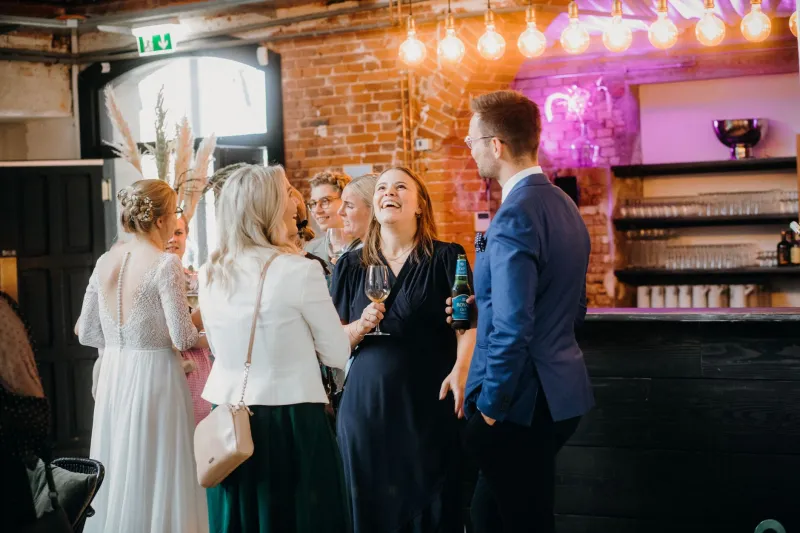
Picture this: a beautifully appointed ballroom in downtown Chicago, flowers arranged to perfection, a catering spread that would impress even the most discerning palate. And yet, scattered throughout the room, clusters of guests stand with drinks in hand, eyes darting toward the exits, exchanging pleasantries that evaporate the moment they are spoken. The event looks flawless on the surface. Underneath, it is failing at its most fundamental purpose.
This scenario plays out at corporate gatherings, weddings, and milestone celebrations across the country with remarkable regularity. Planners invest enormous energy in aesthetics, logistics, and vendor coordination—and comparatively little in what might be called conversation architecture: the intentional design of conditions that make meaningful human interaction not just possible, but natural.
At Tawa Event Company, we have observed that the events guests remember most warmly are rarely the ones with the most elaborate décor. They are the ones where they met someone interesting, laughed unexpectedly, or felt genuinely seen. Engineering those moments is both a science and an art.
Why Silence Happens—and Why It Is Not the Guest's Fault
Before addressing solutions, it is worth understanding the problem at its root. Social psychologists have long established that human beings require what researchers call contextual permission—environmental or social cues that signal it is appropriate to engage with a stranger. Without those cues, most people default to caution, gravitating toward familiar faces and maintaining polite but shallow exchanges with anyone else.
When an event provides no scaffolding for connection, guests essentially face a blank social canvas. For extroverts, this may be mildly uncomfortable. For the large portion of the American population that identifies as introverted or socially anxious, it can be genuinely distressing—and it shows in body language, early departures, and post-event feedback that politely describes the evening as "fine."
The good news is that context is entirely within a planner's control.
Seating as Social Engineering
Few decisions carry more social weight than how guests are seated—and yet many planners treat the seating chart as a logistical afterthought rather than a strategic tool.
The most effective seating arrangements do several things simultaneously. First, they separate guests from their existing social clusters just enough to create productive discomfort. Placing a guest's entire friend group at one table is comfortable but conversationally inert. Mixing two or three familiar faces with two or three new ones creates a natural bridge—guests have the security of a known companion while being gently nudged toward new connections.
Second, consider table geometry. Round tables at a diameter of 60 inches or less encourage cross-table conversation in a way that long rectangular arrangements simply do not. When guests can make eye contact with everyone at their table without craning their necks, conversation flows more organically.
Third, for corporate events in particular, intentional professional mixing can be extraordinarily valuable. Seating a mid-level marketing associate next to a senior operations leader they would never encounter in the normal course of business is not just good for the evening—it can be good for the organization for years afterward.
The Pacing Principle: Giving Conversation Room to Breathe
One of the most common mistakes in event programming is over-scheduling. When guests move from cocktail hour directly into a seated dinner, then into speeches, then into a program, then into dancing—without natural pauses—there is simply no white space for organic conversation to develop.
Intentional pacing means building what we at Tawa Event Company call social plateaus: moments in the schedule that are deliberately unstructured. A 20-minute cocktail period before dinner transitions begin. A brief intermission between program segments. A casual dessert station that draws guests out of their seats and into movement.
These pauses are not dead air—they are the fertile ground where the most memorable interactions of the evening take root. When guests are stationary and scheduled, they are audience members. When they are given permission to wander and linger, they become participants.
Environmental Design That Invites Engagement
The physical environment of an event communicates social norms before a single word is spoken. Spaces that feel rigid and formal signal that guests should behave accordingly. Spaces that offer variety, texture, and invitation signal that exploration and interaction are welcome.
Several environmental strategies are particularly effective. Conversation nodes—small groupings of furniture placed away from the main seating area—give guests a destination that is separate from the primary flow of traffic. A pair of chairs near a window, a high-top table in a corner, or a lounge arrangement near the bar all create micro-environments where two or three people can settle into a more intimate exchange without feeling exposed.
Activity stations serve a similar purpose while adding a layer of shared experience. A cocktail-crafting demonstration, a photo installation, or even a simple interactive display gives strangers something to comment on together—a conversational on-ramp that bypasses the dreaded "so, how do you know the host?" opener.
Lighting also plays a surprisingly significant role. Research in environmental psychology consistently shows that warmer, lower-intensity lighting reduces social inhibition and makes people feel more at ease in unfamiliar company. Harsh overhead lighting, by contrast, tends to heighten self-consciousness. This is not merely an aesthetic consideration—it is a functional one.
The Strategic Introduction: A Forgotten Art
Perhaps the single most underutilized tool in a planner's social toolkit is the facilitated introduction. In an era when event hosts often feel that their job is to welcome guests at the door and then step back, the deliberate act of connecting two people who have reason to know each other remains extraordinarily powerful.
This does not require a formal program or awkward icebreaker games—in fact, it works best when it feels entirely natural. A host, event emcee, or even a trained staff member circulating through the room with the specific mandate to make meaningful introductions can transform the social temperature of an event within the first hour.
The key is preparation. Before the event, identify five to ten pairs or small groups of guests who share a genuine professional interest, personal background, or conversational hook. When the moment is right, bring them together with a specific and honest bridge: "Marcus, I wanted you to meet Diane—she just relocated from Austin and is building out a team in the same space you work in." That specificity is what separates a useful introduction from a throwaway social gesture.
Building Connection Into the Event's DNA
The events that generate the warmest memories—the ones guests reference months later in casual conversation—are those where the planners understood that human connection is not a byproduct of a well-run event. It is the event's primary deliverable.
Every logistical decision, from the arrangement of chairs to the pacing of the program to the temperature of the room, either supports or undermines that goal. When planners approach social flow with the same rigor they bring to catering timelines and vendor contracts, the results are unmistakable.
At Tawa Event Company, we believe that creating moments that last a lifetime begins with creating the conditions under which those moments can occur. Silence, after all, is not inevitable. It is simply a design problem waiting to be solved.