Penny Wise, Event Foolish: The True Price of Cutting Corners on Critical Event Details
There is a particular kind of optimism that surfaces whenever an event budget is reviewed for the second or third time. It sounds reasonable, even responsible: this element is not strictly necessary, or guests probably will not notice the difference. It is the logic of the small concession—and it is one of the most expensive mistakes an event host can make.
At Tawa Event Company, we have observed this pattern across hundreds of corporate gatherings and weddings throughout the United States. The decision to settle for "good enough" rarely stays contained. Instead, it expands, touching every corner of the guest experience and leaving behind consequences that no amount of post-event damage control can fully address.
The Cascade Effect: How One Small Cut Becomes Many Large Problems
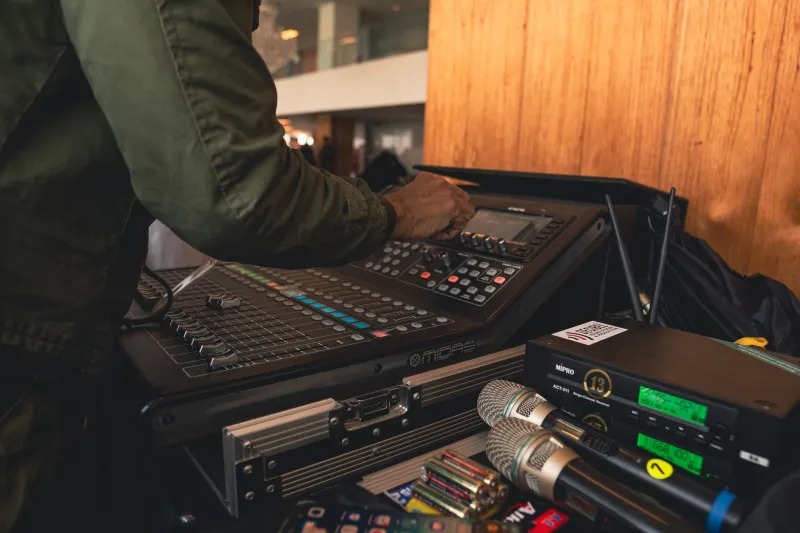
Consider a corporate product launch hosted by a mid-sized technology firm in Austin, Texas. Facing budget pressure three weeks before the event, the planning team elected to forgo a dedicated audio-visual technician in favor of a junior staff member operating rented equipment without a rehearsal. The rationale was straightforward: the presentation was simple, the room was not large, and the savings amounted to roughly $1,800.
What followed was anything but simple. A microphone feedback loop disrupted the keynote speaker's opening remarks. The backup laptop had not been tested with the venue's HDMI configuration, delaying the product demo by eleven minutes. Audience engagement, measured through a post-event survey, dropped 34 percent below the company's previous launch benchmarks. Two regional media contacts who attended filed brief, unenthusiastic coverage. The cost of re-engaging those contacts through a supplemental press briefing: approximately $4,200.
The $1,800 in savings ultimately cost the company more than twice that amount—before accounting for the subtler erosion of brand perception among the 200 attendees.
Catering: Where Budget Decisions Become Dinner Conversation
Food is among the most emotionally resonant elements of any event. Neuroscientific research consistently demonstrates that taste and smell are among the most powerful triggers of memory formation. When an event host selects a lower-tier catering provider primarily on price, they are not simply affecting one line item. They are shaping the dominant sensory memory guests will carry from the experience.
A wedding in the Hudson Valley region of New York illustrates this dynamic with uncomfortable clarity. The couple, working within a tight budget, replaced their originally selected caterer—a regional farm-to-table provider—with a less expensive alternative after a venue fee increase. The substitute caterer delivered food that was technically adequate but notably uninspired. Guests noticed. Social media posts from the event focused disproportionately on the venue's beauty and the couple's attire, but several candid comments referenced the food as a disappointment.
More significantly, the couple had hoped to refer their caterer to two close friends also planning weddings that year. Those referrals went elsewhere. The downstream loss in vendor goodwill and social capital—though difficult to quantify precisely—represented a real cost that the initial savings did not anticipate.
Lighting: The Detail That Defines Every Photograph Taken That Night
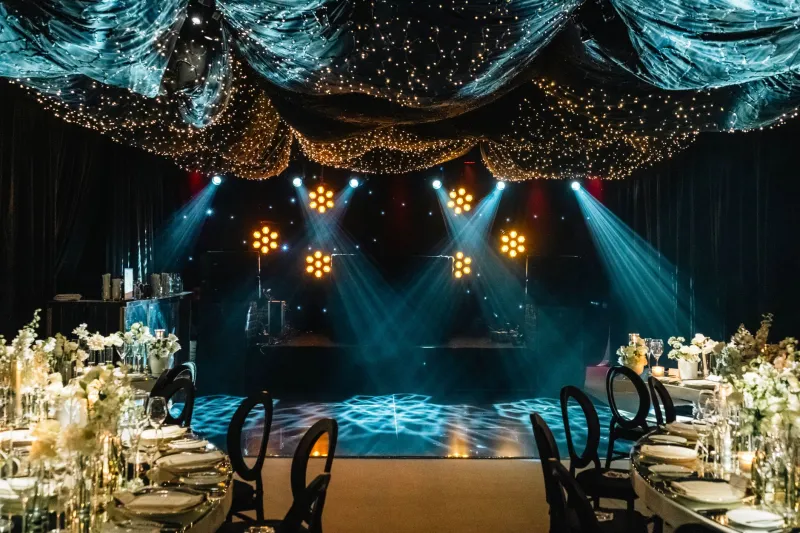
Lighting is perhaps the most underestimated line item in event planning. It is invisible when executed correctly and painfully obvious when it is not. Yet it consistently appears on the shortlist when budgets are reviewed, because its value is difficult to articulate to a client who has not yet experienced the difference.
At a corporate gala in Chicago, a financial services firm elected to use the venue's standard overhead lighting rather than invest in the atmospheric uplighting and pin-spot table accents their event planner had recommended. The savings were modest—approximately $2,500. The result was a room that felt, in the words of one attendee, "like a conference room that had been decorated for a party."
The firm's internal photography team captured the evening for use in company communications and recruiting materials. Upon review, the images were deemed unusable for marketing purposes due to harsh, unflattering overhead light. A professional photographer was subsequently hired to recreate key branded moments in a studio setting. Total cost of that remediation: $3,800—plus the intangible loss of authentic event imagery that no studio session can fully replicate.
The ROI of Strategic Investment: What the Numbers Actually Show
The argument for cutting event costs is almost always framed in terms of what is saved. The more instructive calculation is what is returned when critical infrastructure receives appropriate investment.
Research from the events industry consistently shows that guest satisfaction scores are most heavily influenced by three elements: food quality, audio-visual clarity, and environmental atmosphere—which is largely a product of lighting and spatial design. These are precisely the categories most frequently targeted for budget reduction.
When event hosts invest deliberately in these areas, the returns manifest in multiple forms: higher Net Promoter Scores from corporate attendees, stronger social media engagement from wedding guests, increased likelihood of referrals and repeat business, and media coverage that accurately reflects the quality of the experience delivered.
At Tawa Event Company, our internal data across client events over the past several years reveals a consistent pattern: events where clients maintained investment in audio-visual production, catering quality, and lighting design reported guest satisfaction ratings averaging 28 percent higher than events where those categories were reduced. More tellingly, clients who preserved those investments were 40 percent more likely to return for a subsequent event within 18 months.
The Conversation Every Event Planner Should Be Having
None of this is an argument against thoughtful budget management. Responsible event planning requires making deliberate choices about where resources are allocated. The distinction worth drawing is between strategic prioritization and reactive cost-cutting.
Strategic prioritization asks: which elements most directly shape the guest experience, and how do we protect those while finding flexibility elsewhere? Reactive cost-cutting asks only: what can we remove to lower this number?
The answers to those two questions lead to very different events—and very different outcomes.
When a client approaches us at Tawa Event Company with budget constraints, our first conversation is always about identifying the non-negotiables: the elements that, if compromised, will undermine everything else the event is designed to achieve. Sound is almost always on that list. Food quality is almost always on that list. Lighting, more often than not, belongs there as well.
From that foundation, we work outward—finding genuine flexibility in areas that are meaningful but not foundational. Perhaps the floral arrangements can be simplified without reducing visual impact. Perhaps the printed collateral can be scaled back in favor of digital alternatives. These are the trade-offs that preserve the guest experience while honoring real financial boundaries.
What "Good Enough" Really Costs
The phrase "good enough" carries a quiet confidence that is rarely warranted in event planning. An event is not a spreadsheet or a logistics report. It is a lived experience, evaluated in real time by real people whose impressions are shaped by every detail they encounter—including the ones the planning team decided were not worth the investment.
The moments that last a lifetime are not built on compromise. They are built on intention, on the understanding that every element of an event communicates something to the people who experience it. When that communication is muddled by a failed microphone, an uninspired meal, or a room that never quite came to life, the memory formed is not the one anyone intended to create.
The cost of "good enough" is not paid on the invoice. It is paid in the experience—and that is a debt that proves far more difficult to settle.