Beyond the Ballroom: How American Companies Are Reinventing the Corporate Event Experience in 2024
For decades, the corporate event followed a familiar script. A rented conference hall. Rows of identical chairs. A stage with a branded backdrop. A parade of speakers delivering slide-driven presentations to an audience that was, statistically speaking, checking their phones within the first fifteen minutes.
That script is being rewritten—and the revision is happening faster than most industry observers anticipated.
Across the United States, organizations ranging from mid-sized regional firms to global corporations headquartered in New York, San Francisco, and Chicago are fundamentally reconsidering what a corporate event should accomplish and, by extension, what it should look like. The results are striking: events that feel less like obligatory gatherings and more like curated experiences, built around participation, emotion, and genuine human connection.
Why the Traditional Format Lost Its Audience
The decline of the conventional corporate event format did not happen overnight, but the pandemic accelerated a shift that was already underway. When organizations were forced to move their gatherings online in 2020 and 2021, they discovered something uncomfortable: many of their events had been held together by proximity and obligation rather than genuine value. Remove the physical room, and the programming that remained was often insufficient to hold attention.
The return to in-person events presented an opportunity—and a challenge. Employees who had spent two years attending webinars from their home offices were no longer willing to sit passively through the equivalent experience in a hotel ballroom. Their expectations had changed, and the organizations that recognized this shift early gained a meaningful competitive advantage in employee engagement and retention.
"There is a real cost to a poorly designed corporate event," notes Jennifer Castillo, a corporate event strategist who works with companies across the Southeast. "When employees leave a company gathering feeling like their time was wasted, that sentiment doesn't stay in the room. It follows them back to their desks, and it affects how they talk about the organization to their colleagues and networks."
The Immersive Experience Model: What It Actually Means
The term "immersive experience" has become something of a buzzword in event planning circles, and like many buzzwords, it risks being applied so broadly that it loses meaning. In practice, however, the immersive corporate event model has several defining characteristics that distinguish it from its traditional predecessor.
Active Participation Over Passive Reception
Immersive events are designed around the participant, not the presenter. Rather than delivering information to an audience, they create environments in which attendees discover, interact with, and contribute to the content themselves. This might take the form of collaborative workshops, interactive product demonstrations, or facilitated small-group discussions that replace keynote sessions.
Microsoft's 2023 internal innovation summit, held across multiple cities simultaneously, replaced its traditional main-stage format with what the company described as an "experience campus"—a series of interconnected zones, each dedicated to a different theme or challenge, through which employees rotated in small groups. Feedback surveys indicated a 40 percent increase in reported engagement compared to the prior year's conventional format.
Technology as an Enabler, Not a Gimmick
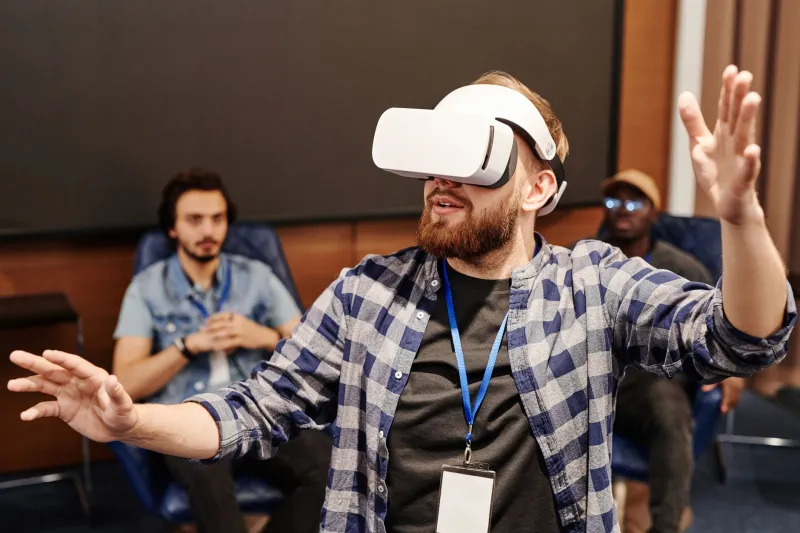
The most effective corporate events of 2024 are using technology purposefully rather than decoratively. Augmented reality product showcases, AI-powered networking matchmaking tools, and real-time audience response platforms are being deployed not because they are impressive, but because they serve a specific experiential goal.
Hybrid event technology has matured considerably since the early pandemic-era experiments. Today's hybrid corporate events can create genuinely equitable experiences for both in-person and remote attendees—a significant advancement from the days when the virtual audience was essentially watching a livestream of an event designed for the physical room.
Wellness as a Core Programming Element
Perhaps the most significant shift in corporate event design over the past two years is the mainstreaming of wellness programming. What was once considered an optional add-on—a yoga session before the morning keynote, perhaps, or a meditation break after lunch—has become a central design consideration for many organizations.
Companies like Salesforce, Patagonia, and several major financial institutions have incorporated dedicated wellness tracks into their annual gatherings, recognizing that employee wellbeing and professional performance are not separate concerns. Events that include mindfulness sessions, movement breaks, and intentional downtime consistently outperform traditional formats on post-event satisfaction surveys.
Personalized Networking: The End of the Business Card Exchange
For many professionals, the networking component of corporate events has historically been among the least satisfying. The combination of large crowds, limited time, and the pressure to make meaningful connections often produces the opposite of its intended effect: surface-level exchanges that are forgotten before the event has concluded.
In 2024, event planners are applying sophisticated personalization strategies to the networking challenge. AI-driven attendee matching platforms analyze professional profiles, stated interests, and event goals to suggest specific connections before the event begins. Structured networking formats—roundtables, speed networking sessions, and interest-based breakout groups—replace the unguided cocktail hour as the primary vehicle for professional connection.
"The old model assumed that putting people in the same room was sufficient," says David Park, a corporate event designer based in Los Angeles. "The new model understands that meaningful connection requires intentional design. When we give attendees a reason to talk to a specific person, rather than just hoping they find each other, the quality of the relationships that form is dramatically higher."
What Leading Organizations Are Doing Differently
Several patterns emerge consistently among companies that are successfully reinventing their corporate event strategies in 2024:
-
Smaller, More Frequent Gatherings: Rather than investing the majority of the annual events budget in a single large-scale conference, many organizations are distributing that investment across multiple smaller, more targeted events throughout the year. This approach allows for more focused programming and more intimate attendee experiences.
-
Destination as Content: Forward-thinking companies are selecting event destinations that contribute meaningfully to the event's themes and goals. A sustainability-focused company holding its annual retreat at a certified eco-resort in Colorado is making a statement that reinforces its values—and that statement becomes part of the event's narrative.
-
Measuring What Matters: The shift toward immersive experiences has been accompanied by a growing sophistication in event measurement. Organizations are moving beyond attendance counts and satisfaction scores toward metrics that reflect genuine business impact: post-event collaboration rates, idea implementation rates, and employee retention data correlated with event participation.
Looking Ahead: What's Next for Corporate Events
Industry analysts and event professionals broadly agree that the trends shaping corporate events in 2024 will accelerate rather than plateau in the years ahead. Artificial intelligence will play an increasingly central role in event personalization and logistics management. The boundary between physical and digital event experiences will continue to blur. And the expectation that corporate gatherings must deliver measurable value—not merely fill a calendar slot—will become the universal standard rather than the exception.
At Tawa Event Company, we work with corporate clients across the country to design events that reflect these evolving expectations. Our approach begins with a fundamental question: what do you want your attendees to feel, learn, and do differently as a result of this experience? The answer to that question drives every subsequent decision—from venue selection to programming design to the final moments of the event.
The companies that are winning in the corporate event space are not simply adopting new technologies or trending formats. They are thinking more carefully about the purpose of gathering—and designing experiences worthy of the time their people invest in attending them.